Process
Our Process: Purposeful Design, Lasting Partnerships
At The Narrative Epistles, our process is more than a framework—it’s a philosophy. We believe great learning isn’t simply built; it’s co-created. That’s why we treat every client as a strategic partner, collaborating to design experiences that address immediate learning needs while scaling with your organization’s long-term growth.
Our instructional design process is grounded in the ADDIE model—combining the structure of Analysis, Design, Development, Implementation, and Evaluation with the agility and reflection of modern learning design practices. What sets our approach apart is our Lessons Learned phase—an intentional step for reflection and continuous improvement that strengthens every subsequent project.
From kickoff to evaluation, our process emphasizes clarity, communication, and adaptability, ensuring that every design decision is informed, intentional, and impactful.
Phase 1: Analysis – Understanding the Learning Landscape
We begin by asking the right questions—not just what needs to be taught, but why, for whom, and how it aligns with broader organizational goals. Our kickoff meeting brings together your stakeholders and our design team to establish shared vision and expectations.
Needs Analysis
We uncover the core challenge or opportunity behind your training request. Is it a performance gap, a new initiative, or an organizational shift? We identify how learning can best support and accelerate your objectives.
Learner Analysis
We study your target audience—their backgrounds, prior knowledge, and learning preferences—to tailor content that’s accessible and engaging. Our designs often include scaffolding techniques such as storytelling, microlearning, or multi-modal delivery (text, audio, video, interactive scenarios) to enhance understanding.
Gap Analysis
We review existing materials, identify content gaps, and determine what needs to be developed from the ground up. This stage also establishes key project parameters—timelines, communication channels, feedback loops, and success metrics.


Phase 2: Design – Architecting the Learning Experience
With a clear vision, we transition into design, where strategy becomes structure.
Course Alignment
We create measurable learning outcomes mapped to Bloom’s Taxonomy, ensuring alignment with both learner needs and organizational goals. These outcomes drive every decision—from instructional activities to final assessments.
Instructional Strategy
Grounded in adult learning theory, we craft experiences that connect content to learners’ real-world contexts. Our “Teach It, Try It” approach provides guided instruction followed by hands-on application—bridging knowledge with performance.
In parallel, our eLearning developer creates alpha templates aligned with your brand, accessibility requirements, and LMS specifications. These designs evolve collaboratively through review and feedback cycles.
Phase 3: Development – Building for Impact
Our instructional designers script and structure each module based on the design blueprint. Every element is intentional—clear narration, authentic scenarios, formative assessments, and consistent tone for an engaging learner journey.
Using tools like Articulate Storyline, Rise, Adobe Captivate, iSpring Suite, Camtasia, and Lectora Inspire, we translate scripts into fully functional, interactive eLearning modules. We ensure every product combines technical precision, visual appeal, and WCAG 2.2 accessibility compliance.
Our dual-track workflow—while one module is being scripted, another is built—enables efficiency and quality assurance through ongoing feedback and rigorous testing across devices.
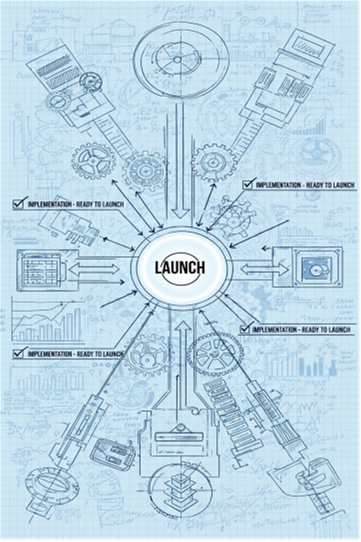
Phase 4: Implementation – Ready to Launch
Implementation is not the end—it’s the bridge between design and learner experience.
Our team supports you in testing modules within your Learning Management System (LMS), resolving compatibility issues, and fine-tuning the learner journey. Together, we co-develop:
- Course landing pages and introductions
- Downloadable resources and job aids
- Quizzing structures and digital badging systems
By launch day, all modules have been thoroughly validated—ensuring a seamless, reliable experience for learners across platforms and environments.
Phase 5: Evaluation – Measuring What Matters
Success extends beyond launch—it’s about measurable, lasting impact.
Our evaluation blends formative and summative assessment tools to track performance and identify areas for enhancement. Together, we define and monitor key performance indicators such as:
- Enrollment and completion rates
- Assessment outcomes and knowledge retention
- Engagement metrics and learner feedback
- Content interaction and dwell time
We visualize these results through real-time analytics dashboards, enabling ongoing optimization of your learning programs. To sustain engagement and retention, we recommend post-launch reinforcement—such as digital badges, follow-up activities, or content refreshes.